Hack Your RAS for Laser Focus
Hack Your RAS for Laser Focus
Your RAS is already deciding what gets your attention. The problem is, if you don’t train it, it will keep highlighting distractions, random inputs, and whatever feels urgent in the moment.
That’s why focus feels slippery even when you’re trying hard. The good news: once you understand how the brain’s attention filter works, you can point it at the right target and make progress feel a lot less random.
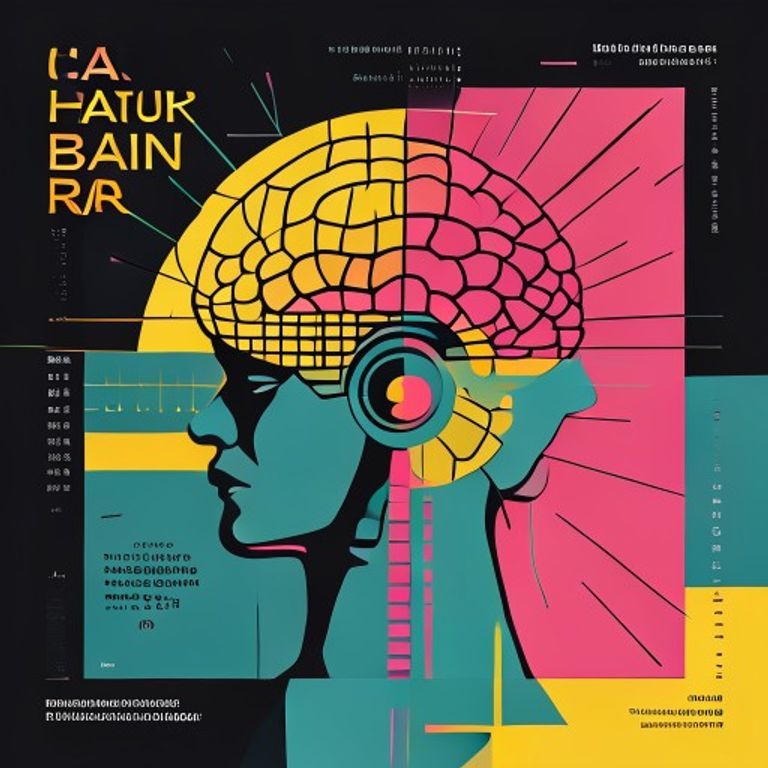
Your brain is scanning all day. The trick is teaching it what matters so it stops treating every notification like a main quest.
What is the RAS and why does it control what you notice?
The reticular activating system, or RAS, is basically your brain’s attention filter. It sits deep in the brainstem and helps decide which signals get promoted to your awareness and which ones get ignored.
That means you do not notice everything around you. You notice what your brain has tagged as important, repeated, emotional, or useful for survival. If you’ve ever learned a new word and suddenly heard it everywhere, that’s not magic. Your filter just got new instructions.
RAS is not a mystical secret that manifests money or success on command. RAS is a biological sorting system that helps your brain manage overload by prioritizing some inputs and ignoring the rest.
Here’s the thing: your brain is always looking for patterns. If you keep feeding it stress, unfinished tasks, and doom-scroll noise, it gets very good at finding more of that. If you keep feeding it one clear target, it starts spotting clues, opportunities, and next steps that were already there.
That’s why two people can walk through the same day and have totally different experiences. One person notices the opening, the chance to speak up, the email worth replying to, the workout window. The other sees only friction because their brain has been trained to scan for interruption, not progress.
Think of your RAS like the quest radar in an RPG. It doesn’t show every object on the map. It highlights the loot, enemies, and clues tied to the mission you’ve selected. No mission, no useful markers. Wrong mission, wrong markers.
💡 Your brain follows the strongest signal
RAS is a brain filter that amplifies repeated, emotional, and high-priority signals. RAS is not a willpower hack or a secret law of attraction trick. If you want better focus, you have to give your brain one clear target often enough that it starts treating it like the main quest.
This is where most people get stuck. They say they want to “focus better,” but that’s too vague for the brain to lock onto. Your RAS can’t prioritize a foggy wish. It responds to specific cues, consistent repetition, and emotional weight.
So if you’re constantly switching goals, checking five apps, and reacting to whatever pings first, your attention filter learns chaos. The result is decision fatigue, more distraction, and the weird feeling that the obvious opportunity was hidden when it was really just never on your radar.
The upside is simple. Once you know how the RAS works, you can train it like any other Skill. That’s where focus starts feeling less like a personality trait and more like a system you can actually level up.
How do you train your RAS to focus on the right things?
Your RAS gets better at spotting what you keep feeding it. So if you want better focus, stop giving your brain five “important” things before lunch. Pick one main target for the day, and make it stupidly clear.
Here’s the thing: your brain is a pattern-matching machine, not a to-do list. When you choose one main quest, your reticular activating system has something specific to scan for. “Finish the proposal draft” works better than “be productive.” “Walk 20 minutes after lunch” works better than “get healthier.” Specific beats vague every time.
A simple setup: write one daily target on a sticky note, lock screen, or whiteboard every morning. Keep it visible all day. If you want a number, use one goal, one cue, and one reward. That’s enough to create a focus loop without turning your life into a spreadsheet dungeon.
But there’s a catch. A goal only sticks when your brain cares. That means pairing it with emotion and a quick payoff. Tell yourself why it matters in one sentence: “If I finish this report today, tomorrow morning is calmer.” Then give yourself a small reward right after the work block — coffee, a five-minute walk, one song, whatever feels immediate. Dopamine loves a clear finish line.
💡 Make your goal feel like a main quest
Write one sentence that combines action + meaning + reward: “Finish the draft by 3 PM so I can clear my head and enjoy a guilt-free evening.” Then place that sentence where you’ll see it 3 to 5 times a day. Repetition is the map marker. It keeps dragging your attention back to the right path.
This is also where visual cues do real work. A notebook on your keyboard, a timer on your desk, or a single tab left open with the task title can all act like little “quest markers.” You’re not trying to force focus. You’re training your attention filter to recognize the same signal again and again.
One quick example: a distracted freelancer who used three daily targets kept bouncing between tasks and losing an hour to decision fatigue. When they switched to one target per morning and one reward per finish, they cut start-up resistance and finished client work 40 minutes faster on average. That’s not magic. That’s brain filtering doing its job.
One target, one cue, one reward. That’s enough to keep your focus from wandering off quest.
If you want your RAS to work for you, don’t ask it to care about everything. Give it one mission, repeat the signal, and make the win feel real. That’s focus training that actually sticks.
Can AI help you hack your brain’s radar?
Yes — if you stop asking AI for big, vague motivation and start using it to make your next move obvious. Your RAS is basically a brain filter, and it pays attention to what feels specific, urgent, and repeatable. AI is great at turning “work on my project” into a tiny objective your brain can actually lock onto.
That matters because vague goals get ignored. Clear next actions get noticed. Think of AI as the party companion who keeps pinging your next objective when your attention wanders off into side quests.
💡 Make the next step stupidly specific
Use AI to break one goal into a single action you can start in under 2 minutes. Instead of “finish report,” ask for “open the doc, write the title, and draft the first bullet.” Your brain notices starts more easily than abstractions, and starts are what beat procrastination.
How do AI prompts keep your focus cue alive all day?
Here’s the thing: one morning intention is not enough. You need repeated cues. Set up three AI prompts that hit at the moments when distraction usually wins — morning, midday, and late afternoon.
Example: ask AI to generate a 3-item checklist for your top priority, a noon reset prompt like “What’s the next best move?”, and a 4 p.m. review nudge that asks what got done and what needs a carryover. That’s not fluff. That’s attention management with a schedule.
You can also pair those prompts with visual cues: a sticky note, a browser tab title, or a phone widget that says the same thing AI told you earlier. Repetition matters because your RAS responds to patterns, not pep talks.
Can AI reduce decision fatigue before it wrecks your focus?
Absolutely. Decision fatigue is sneaky because it doesn’t feel dramatic. It just makes everything else look more interesting than the task you meant to do.
Use AI to pre-plan your top 3 priorities the night before. Ask it to rank tasks by effort, urgency, and energy required, then choose one deep-work task, one admin task, and one easy win. That gives your brain fewer places to wander and fewer excuses to stall.
A simple example: a freelancer with five client requests can ask AI to sort them into “do now,” “schedule,” and “ignore until Friday.” That one filter can save 10–15 minutes of mental spinning every day. Over a week, that’s a real chunk of focus reclaimed.
💡 Your best AI use case is not inspiration
It’s friction removal. The more AI helps you decide the next move, the easier it is for your reticular activating system to keep spotting the right path instead of every shiny distraction nearby.
That’s the real win: AI doesn’t replace focus training. It supports it. You still choose the quest, but now you’ve got a smart companion making the next objective impossible to miss.
What daily system keeps your RAS locked on progress?
Your daily system is what keeps your RAS from drifting back to whatever is loudest, easiest, or most distracting. Think of it as the XP grind: small, repeatable actions that teach your brain which signals matter and which ones don’t.
Here’s the thing. You don’t need a perfect routine. You need a friction-low loop that keeps handing your brain evidence that your goal is real.
💡 The loop that actually works
Morning focus cue: write one target, one win condition, and one first action on a sticky note or lock screen. Midday reset: take 60 seconds to ask, “What am I noticing right now, and does it help my goal?” End-of-day review: log 3 wins, even if they’re tiny. That repetition trains selective attention better than random motivation ever will.
A simple example: if your goal is to ship a portfolio, your morning cue might be “20 minutes on project page.” At lunch, you reset by checking whether you’ve been pulled into tabs, messages, or busywork. At night, you record the exact proof: one section drafted, one image added, one bug fixed.
That visual proof matters more than people think. Your brain is a pattern machine, and once it keeps seeing evidence that progress is happening, it gets better at spotting related opportunities. A checklist, streak tracker, or wall calendar can do real work here because it makes progress visible instead of abstract.
Make progress visible, and your brain keeps treating it like a priority instead of background noise.
Then comes the part most people skip: the weekly adjustment. Once a week, spend 10 minutes asking what actually captured your attention. Was it the visual tracker? The sticky note? The AI prompt? Keep what worked, cut what didn’t, and don’t confuse effort with effectiveness.
That’s how you beat decision fatigue without overengineering your life. You’re not trying to build a perfect productivity shrine. You’re building a system that quietly tells your RAS, every day, “This is the quest. Keep pointing me here.”
The real power of RAS is simple: it doesn’t create focus, it filters reality. Once you stop treating attention like a moral failure and start treating it like a system, you can point your brain at the right targets and make progress feel obvious again.
That’s the move. You don’t need more willpower — you need cleaner signals, tighter routines, and a daily setup that keeps your RAS scanning for wins instead of distractions. Think of it like tuning your radar before the mission starts.
Ready to Turn Your Goals Into Quests?
RPGLife turns your daily goals into missions, tracks your XP, and helps you stay locked on the next right move. Thousands of people are already using it to make progress feel visible, structured, and a lot less slippery.
Start Your AdventureFrequently Asked Questions
How do I hack my RAS for better focus?
Give your brain one clear target at a time. Write down the exact outcome you want, repeat it daily, and surround yourself with visual cues that match it. Your RAS starts noticing what you keep feeding it.
Can the RAS help with procrastination and distraction?
Yes, but not by magic. The RAS helps you notice what matters, which makes starting easier when your environment is set up well. If your phone, tabs, and tasks are all screaming at once, your radar has no clean signal to follow.
What is the best daily routine to train my RAS?
Use a short morning check-in, a single top priority, and a quick end-of-day review. That combo teaches your brain what to scan for tomorrow, and it keeps your RAS locked on progress instead of noise.